 Image 1 of 1
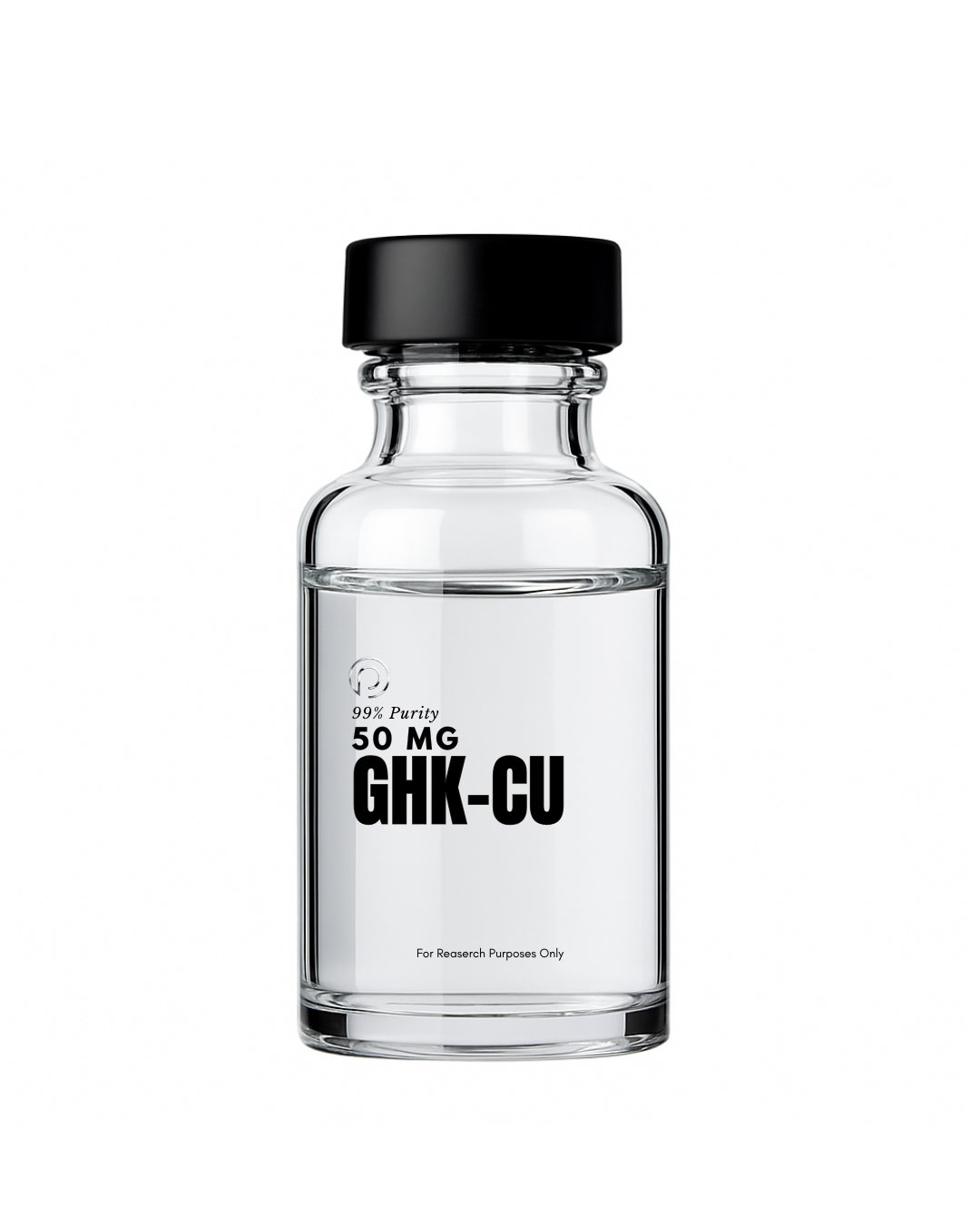
GHK-CU 50 MG
GHK-Cu
GHK-Cu (Glycyl-L-Histidyl-L-Lysine–Copper) is a naturally occurring copper-binding peps found in human plasma, saliva, and urine. It plays an important role in wound healing, tissue regeneration, inflammation control, and collagen production.
GHK-Cu is considered a regenerative and repair-signaling peps. Its ability to bind copper ions (Cu²⁺) allows it to influence a wide range of cellular and biochemical pathways related to skin quality, hair growth, aging, and tissue repair.
In topical form, GHK-Cu appears as a bright blue compound because of its copper complex. It is used in skincare formulations, wound-care dressings, and various regenerative therapies.
How GHK-Cu Works
1. Copper Delivery to Cells
GHK-Cu functions as a copper-transporting peps, delivering copper ions to tissues. Copper is essential for:
Collagen cross-linking
Elastin formation
Antioxidant enzyme activity (including SOD—superoxide dismutase)
Nervous system and immune function
2. Activation of Repair Pathways
GHK-Cu can signal cells to:
Increase collagen and glycosaminoglycan production
Improve extracellular matrix (ECM) remodeling
Accelerate wound repair
Reduce oxidative stress
3. Anti-Inflammatory Effects
GHK-Cu reduces inflammatory cytokines and balances immune responses through its protective peps signaling role.
4. Gene Expression Modulation
Research shows that GHK-Cu can beneficially influence the activity of hundreds of human genes involved in:
Tissue repair
Immune regulation
Cellular renewal
Antioxidant defenses
This broad genetic influence is a key reason why GHK-Cu is popular in regenerative applications.
Benefits of GHK-Cu
1. Skin Regeneration & Anti-Aging
GHK-Cu is highly valued in skincare due to its regenerative peps properties, which promote:
Increased collagen I & III production
Improved skin elasticity and firmness
Thicker, more resilient skin
Fewer fine lines and wrinkles
Enhanced skin hydration
Reduction in hyperpigmentation and scarring
It supports healthy skin barrier function and helps reverse visible damage caused by UV exposure, pollution, and aging.
2. Wound Healing & Tissue Repair
GHK-Cu has a natural role in the body’s wound-healing processes. Benefits include:
Faster tissue regeneration
Reduced inflammation
Improved blood vessel growth (angiogenesis)
Enhanced cellular migration to injury sites
Antimicrobial support through copper delivery
It is sometimes used in medical dressings and postoperative care formulations.
3. Hair Growth Support
GHK-Cu may help improve hair density and scalp health by:
Increasing follicle size
Extending hair growth (anagen) phase
Reducing follicle miniaturization
Improving scalp circulation
It’s often included in hair-loss serums and regenerative treatments.
4. Anti-Inflammatory and Antioxidant Effects
GHK-Cu helps regulate inflammatory pathways and boosts antioxidant activity, including:
Activation of superoxide dismutase (SOD)
Reduction of oxidative stress
Lowered inflammatory cytokines
These effects can support broader tissue health and contribute to anti-aging benefits.
5. Support for Connective Tissue & Muscle Health
Because it enhances collagen, elastin, and ECM repair, GHK-Cu may support:
Tendon and ligament recovery
Joint and cartilage health
Reduced scar formation
Some experimental research explores GHK-Cu for muscle regeneration and post-exercise tissue repair.
Common Uses of GHK-Cu
1. Skincare Formulations
GHK-Cu is commonly found in:
Anti-aging serums
Eye creams
Moisturizers
Post-procedure healing products
Facial masks
Its repair-signaling peps actions make it a luxury ingredient in high-end skincare.
2. Hair Growth Products
Used in:
Scalp serums
Transdermal microneedling treatments
Follicle-stimulating solutions
3. Wound Care
GHK-Cu may be included in:
Regenerative wound dressings
Burn-care formulations
Scar-reduction therapies
4. Injectable or Transdermal Regenerative Treatments
Some clinicians use GHK-Cu via:
Microinjections
Microneedling
Mesotherapy blends
Topical formulations delivered with dermal devices
(Always under appropriate medical supervision.)
Risks and Side Effects of GHK-Cu
Although generally well tolerated, GHK-Cu still carries risks depending on dose, delivery method, and individual response.
Common and Mild Side Effects
More likely with topical or cosmetic use:
Skin irritation
Redness
Itching
Mild swelling
Temporary dryness
Sensitivity due to copper content
These reactions often occur if the concentration of the peps complex is too high or if applied to already irritated skin.
Moderate Risks
1. Allergic Reactions
Some individuals may experience hypersensitivity to copper complexes or the GHK peps compound itself.
2. Copper Overload (Very Rare)
High doses or improper use of injectable GHK-Cu may contribute to excessive copper exposure, which could affect:
Liver function
Neurological health
Cellular oxidative balance
Topical use is unlikely to cause systemic copper excess.
3. Interference With Other Active Ingredients
GHK-Cu may interact with:
Strong acids (AHAs, BHAs)
Retinoids
Vitamin C
Certain prescription topicals
These can destabilize the GHK-Cu peps structure or reduce its effectiveness.
4. Pigmentation Changes
In rare cases, excessive copper exposure can cause temporary pigmentation shifts.
Serious or Rare Risks
1. Infection (if injected improperly)
Improper clinical use or non-sterile injections may cause:
Bacterial infection
Tissue irritation
Abscess formation
2. Excessive Tissue Growth (Theoretical)
High, uncontrolled exposure might overstimulate repair processes and affect scar formation in certain individuals.
3. Systemic Reactions
Very rare, but may include:
Hives
Breathing difficulty
Severe swelling
These situations require immediate medical care.
GHK-Cu
GHK-Cu (Glycyl-L-Histidyl-L-Lysine–Copper) is a naturally occurring copper-binding peps found in human plasma, saliva, and urine. It plays an important role in wound healing, tissue regeneration, inflammation control, and collagen production.
GHK-Cu is considered a regenerative and repair-signaling peps. Its ability to bind copper ions (Cu²⁺) allows it to influence a wide range of cellular and biochemical pathways related to skin quality, hair growth, aging, and tissue repair.
In topical form, GHK-Cu appears as a bright blue compound because of its copper complex. It is used in skincare formulations, wound-care dressings, and various regenerative therapies.
How GHK-Cu Works
1. Copper Delivery to Cells
GHK-Cu functions as a copper-transporting peps, delivering copper ions to tissues. Copper is essential for:
Collagen cross-linking
Elastin formation
Antioxidant enzyme activity (including SOD—superoxide dismutase)
Nervous system and immune function
2. Activation of Repair Pathways
GHK-Cu can signal cells to:
Increase collagen and glycosaminoglycan production
Improve extracellular matrix (ECM) remodeling
Accelerate wound repair
Reduce oxidative stress
3. Anti-Inflammatory Effects
GHK-Cu reduces inflammatory cytokines and balances immune responses through its protective peps signaling role.
4. Gene Expression Modulation
Research shows that GHK-Cu can beneficially influence the activity of hundreds of human genes involved in:
Tissue repair
Immune regulation
Cellular renewal
Antioxidant defenses
This broad genetic influence is a key reason why GHK-Cu is popular in regenerative applications.
Benefits of GHK-Cu
1. Skin Regeneration & Anti-Aging
GHK-Cu is highly valued in skincare due to its regenerative peps properties, which promote:
Increased collagen I & III production
Improved skin elasticity and firmness
Thicker, more resilient skin
Fewer fine lines and wrinkles
Enhanced skin hydration
Reduction in hyperpigmentation and scarring
It supports healthy skin barrier function and helps reverse visible damage caused by UV exposure, pollution, and aging.
2. Wound Healing & Tissue Repair
GHK-Cu has a natural role in the body’s wound-healing processes. Benefits include:
Faster tissue regeneration
Reduced inflammation
Improved blood vessel growth (angiogenesis)
Enhanced cellular migration to injury sites
Antimicrobial support through copper delivery
It is sometimes used in medical dressings and postoperative care formulations.
3. Hair Growth Support
GHK-Cu may help improve hair density and scalp health by:
Increasing follicle size
Extending hair growth (anagen) phase
Reducing follicle miniaturization
Improving scalp circulation
It’s often included in hair-loss serums and regenerative treatments.
4. Anti-Inflammatory and Antioxidant Effects
GHK-Cu helps regulate inflammatory pathways and boosts antioxidant activity, including:
Activation of superoxide dismutase (SOD)
Reduction of oxidative stress
Lowered inflammatory cytokines
These effects can support broader tissue health and contribute to anti-aging benefits.
5. Support for Connective Tissue & Muscle Health
Because it enhances collagen, elastin, and ECM repair, GHK-Cu may support:
Tendon and ligament recovery
Joint and cartilage health
Reduced scar formation
Some experimental research explores GHK-Cu for muscle regeneration and post-exercise tissue repair.
Common Uses of GHK-Cu
1. Skincare Formulations
GHK-Cu is commonly found in:
Anti-aging serums
Eye creams
Moisturizers
Post-procedure healing products
Facial masks
Its repair-signaling peps actions make it a luxury ingredient in high-end skincare.
2. Hair Growth Products
Used in:
Scalp serums
Transdermal microneedling treatments
Follicle-stimulating solutions
3. Wound Care
GHK-Cu may be included in:
Regenerative wound dressings
Burn-care formulations
Scar-reduction therapies
4. Injectable or Transdermal Regenerative Treatments
Some clinicians use GHK-Cu via:
Microinjections
Microneedling
Mesotherapy blends
Topical formulations delivered with dermal devices
(Always under appropriate medical supervision.)
Risks and Side Effects of GHK-Cu
Although generally well tolerated, GHK-Cu still carries risks depending on dose, delivery method, and individual response.
Common and Mild Side Effects
More likely with topical or cosmetic use:
Skin irritation
Redness
Itching
Mild swelling
Temporary dryness
Sensitivity due to copper content
These reactions often occur if the concentration of the peps complex is too high or if applied to already irritated skin.
Moderate Risks
1. Allergic Reactions
Some individuals may experience hypersensitivity to copper complexes or the GHK peps compound itself.
2. Copper Overload (Very Rare)
High doses or improper use of injectable GHK-Cu may contribute to excessive copper exposure, which could affect:
Liver function
Neurological health
Cellular oxidative balance
Topical use is unlikely to cause systemic copper excess.
3. Interference With Other Active Ingredients
GHK-Cu may interact with:
Strong acids (AHAs, BHAs)
Retinoids
Vitamin C
Certain prescription topicals
These can destabilize the GHK-Cu peps structure or reduce its effectiveness.
4. Pigmentation Changes
In rare cases, excessive copper exposure can cause temporary pigmentation shifts.
Serious or Rare Risks
1. Infection (if injected improperly)
Improper clinical use or non-sterile injections may cause:
Bacterial infection
Tissue irritation
Abscess formation
2. Excessive Tissue Growth (Theoretical)
High, uncontrolled exposure might overstimulate repair processes and affect scar formation in certain individuals.
3. Systemic Reactions
Very rare, but may include:
Hives
Breathing difficulty
Severe swelling
These situations require immediate medical care.